As individuals, we each have a unique approach to investing. Yet many of us are not aware of how our behaviour can affect our financial goals.
We often have instinctive reactions when faced with financial decision-making. Our emotions, not our practical reasoning, often drive our choices and affect our returns.
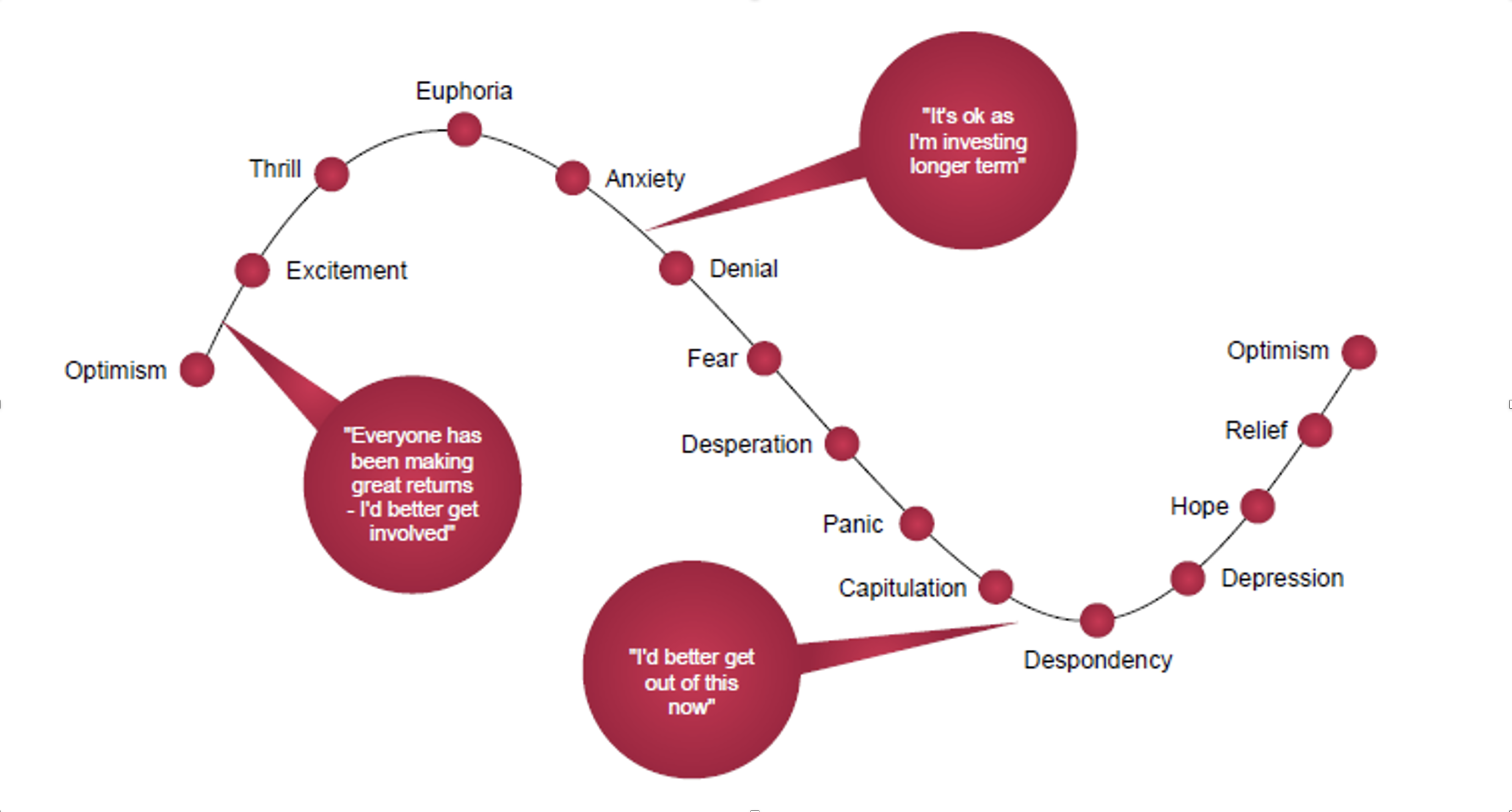
Whether investments are rising or falling, we have a cycle of emotions that can affect investment returns. This cycle may be completely disconnected from actual market performance. Yet at each stage, investors make specific trade-offs between immediate emotional comfort and long-term returns.
The Behavioural Journey Graph
When markets are on the rise, we are keener to invest – experiencing optimism and excitement as investments rise. However, as a result, we can end up buying high.
If markets fall, emotions can turn to denial, fear and even panic as we see our portfolio value plummet along with our expectations. As a result, we often end up selling when prices are low – a response which can be detrimental to the performance of an investment portfolio, highlighting the need to have a long-term investment plan to stick to, regardless of emotional ups and downs.
Working with a Chartered Financial Advice Company, enables you to create an investment portfolio that is specific to your individual needs and financial objectives.
By helping establish a long-term financial strategy, that reflects your needs for emotional comfort we can support you on your investment journey and help avoid potentially detrimental emotionally driven decisions.
The importance of remaining invested
There is no shortage of information and opinion provided by the media, plus friends and colleagues, when it comes to investments and the financial markets. Sometimes, the sheer weight of information available can make you feel like it’s not the right time to be invested.
It can be tempting to try and ‘time the market’. The benefits of getting it right are obvious, but it’s very difficult to predict with any certainty when is the best time to buy or sell.
With the speed that markets move, the risk of getting it wrong is very high and can have significantly negative consequences on your investment. There’s a significant risk that by trying to time your entry, or exit, you could end up selling low or buying high.
That means you risk not only suffering the losses you are trying to avoid, but you compound them by missing out on the highest periods of growth that often follow a fall.
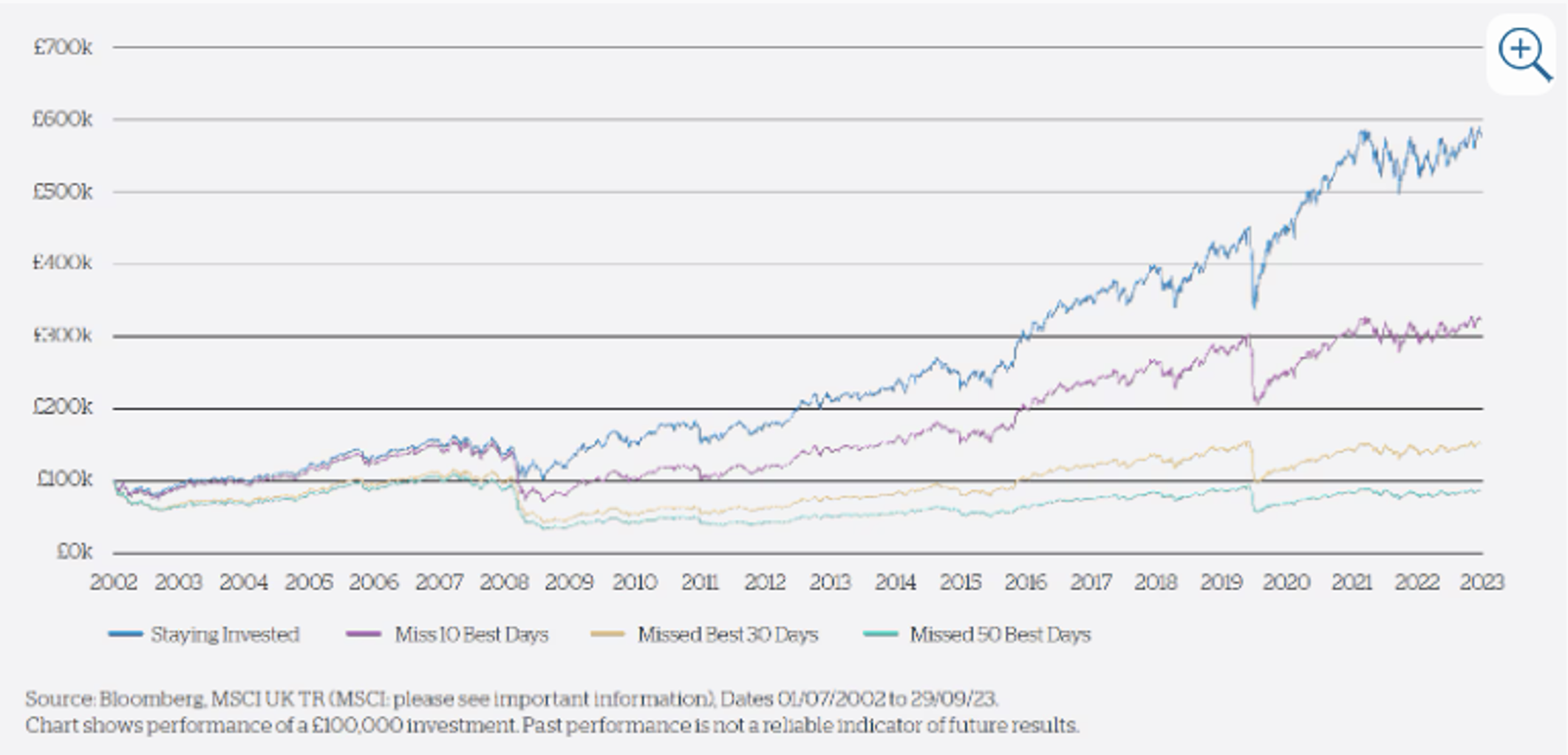
Time in the market, not timing the market
Ultimately, the above shows that if you try to time the market and get it wrong, you would be significantly worse off than if you stayed invested for the duration.
As Chartered Financial Planners, we plan for the long-term volatility we see in the markets. We use sophisticated Cashflow planning tools that allows us to create bespoke analysis of how the normal ups and downs affect your long terms goals. If you wish to discuss any of the above with me, please get in touch.